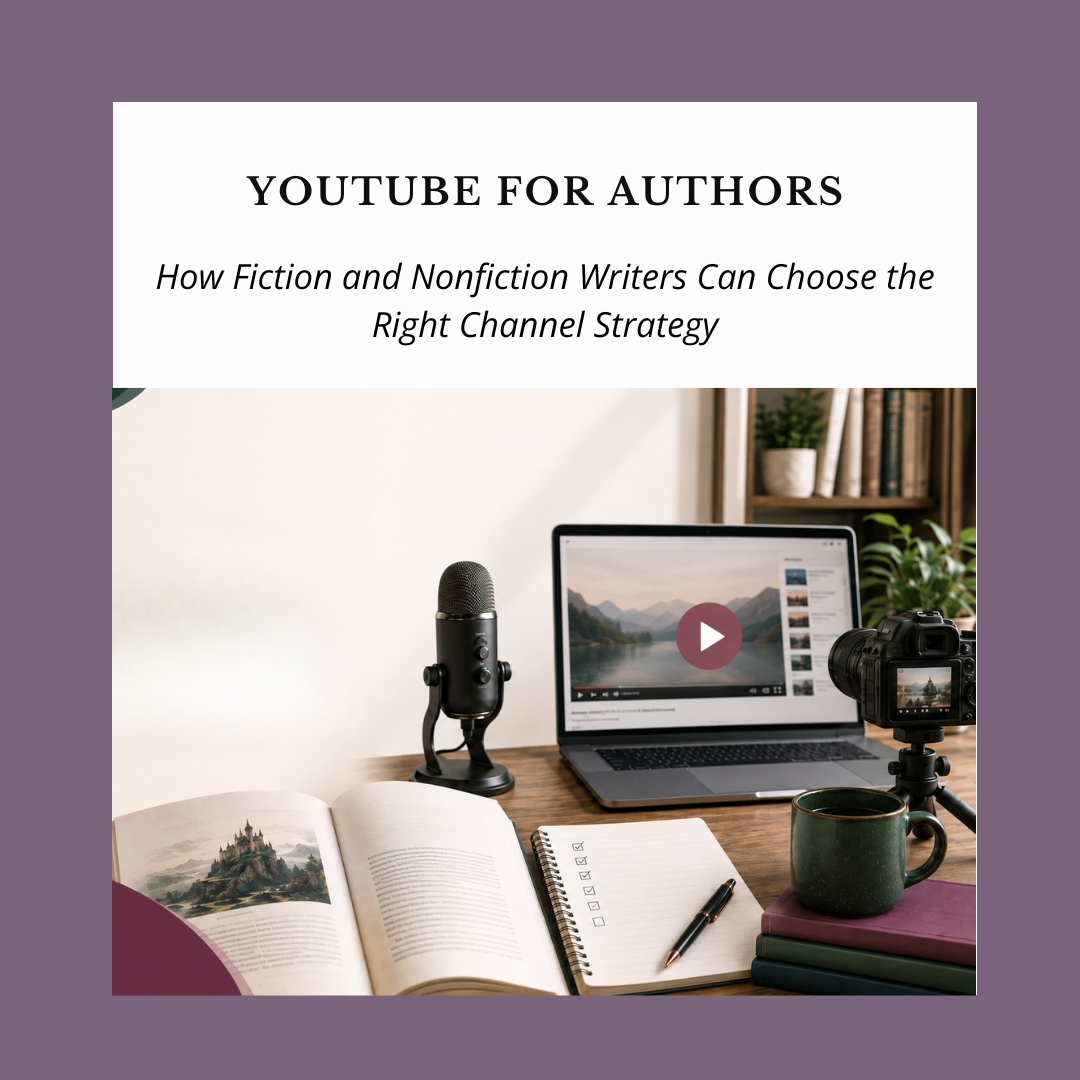
YouTube for authors can be a useful way to help the right readers find your work, understand what you write, and stay connected to you over time.
Maybe you have looked at your growing platform list and wondered whether YouTube is a smart move. Or maybe it feels like one more task you are supposed to manage because everyone says video matters. That advice is too vague to be useful.
YouTube is not the right fit for every author. The better question is not whether YouTube is popular. The better question is what job it should do in your author platform. Unlike a fast-scroll platform, YouTube gives people several ways to find your work. It also gives you more than one place to guide them after they arrive, including your channel homepage, playlists, and featured videos.
That matters because YouTube reaches a huge share of adults in the United States. Pew Research Center found that 84% of U.S. adults use YouTube.
In this post, you will see what YouTube is best used for as an author. You will also see how fiction and nonfiction channel strategies differ, how to choose a clear channel promise, and what to put on your homepage first. The goal here is not to push you onto YouTube. The goal is to help you decide whether it fits, and how to use it well if it does.

What is YouTube for authors best used for?
YouTube for authors is best used to help the right people find you. It also helps them understand your books or ideas and take a next step. That next step might be your website, your email list, a sample chapter, or your book page.
It works best when the channel has a clear job. Without that, it can turn into a pile of random uploads. A few writing updates. A few promo clips. One stray reading vlog. Then the channel stops making sense to new viewers.
Why does YouTube work differently from fast-scroll platforms?
YouTube works differently because people can find you in several places. It also gives you several places to guide them next.
It is not just a feed. Your channel has a homepage. That homepage can include a trailer, a featured video, and custom sections. You can also organize videos into playlists, add posts, and build with Shorts. YouTube says creators can use the Home tab to show a channel trailer, a featured video, and up to 12 custom sections. Posts can also appear on the channel page, the homepage, the Subscriptions feed, or the Shorts feed.
That matters because a video can keep working after the day you post it. On YouTube, people may find your content through search, browse features, suggested videos, the Shorts feed, or channel pages. YouTube tracks those traffic sources in Analytics. That gives authors more than one path to discovery over time.
What practical jobs can YouTube do for an author platform?
For most authors, YouTube can help with discovery, trust, and connection to a next step like a website visit, sample chapter, email signup, or book page.
Three simple jobs YouTube can do
- Help new people find you
- Help the right people understand you
- Help interested viewers go somewhere next
Think about a fiction author who writes suspense. Instead of posting random updates, they make videos about eerie settings, tense character dynamics, and the kinds of stories their readers already love. That helps the right reader think, this feels like my kind of book.
Now think about a nonfiction author who writes about leadership. They answer specific workplace questions that connect to the book’s topic. That helps viewers see the author as clear, useful, and worth following.
This matters because authors are interested in social media, but YouTube still feels unclear for many of them. In BookBub’s 2025 survey, 78% of authors said they use at least one social platform weekly. Only 11% said they used YouTube weekly in the past year. Another 15% said they planned to use YouTube weekly in the next year. That gap suggests growing interest, but also some uncertainty about how YouTube fits an author platform.
So the best way to think about YouTube is simple. It is not just a place to upload videos. It is a place to help the right viewers find you, understand you, and move one step closer to your work.
Want more help figuring out where YouTube fits into your wider author platform? Check out my other free resources for simple tools that can help you build your visibility with more clarity.

How should fiction and nonfiction authors use YouTube differently?
Fiction and nonfiction authors should not use the same YouTube strategy because they are usually trying to attract viewers in different ways. Fiction authors usually need to build curiosity and reader connection, while nonfiction authors usually need to build trust and practical value.
That difference matters from the start. It shapes your topics, your tone, and what viewers should understand after watching. If you miss that difference, the channel can feel off. The videos may be decent, but they may still attract the wrong people.
What should fiction authors focus on?
Fiction authors should focus on helping readers recognize the kind of story experience they offer.
That does not mean every video needs to promote a book. It means the channel should help the right reader think, this feels like my kind of story. A fiction channel can build that feeling through themes, mood, tone, and reader taste. It can also do it through character talk, setting choices, and behind-the-scenes glimpses into story decisions.
A lot of fiction authors get stuck here. They assume YouTube only works if they teach writing. That is not true. Teaching can work, but it is not the only path. Readers may care more about the kind of world you build and the feelings your stories create.
What should nonfiction authors focus on?
Nonfiction authors should focus on helping viewers understand the problem, question, or topic they can help with.
That means the channel should make the author’s value easier to see. A nonfiction viewer often wants clarity fast. They want to know what this author understands, what they explain well, and why they should keep listening.
That does not mean the channel needs to sound formal. It does not need to feel like a lecture either. A strong nonfiction channel often works best when it breaks a big topic into smaller, useful pieces that people can follow.
| Author type | Main goal on YouTube | Good topic angles | What the viewer should think |
| Fiction author | Build curiosity and reader fit | themes, tropes, mood, setting, characters, reading taste, behind-the-scenes story choices | “This sounds like my kind of book.” |
| Nonfiction author | Build trust and practical value | common questions, myths, step-by-step help, topic explainers, lived experience, lessons from the book | “This author understands what I need help with.” |
Here is what that can look like in practice.
Fiction topic ideas
- book themes
- tropes
- mood and atmosphere
- setting inspiration
- character questions
- reading taste
- behind-the-scenes writing life
Nonfiction topic ideas
- common reader questions
- myths and mistakes
- practical examples
- quick lessons
- framework breakdowns
- lived experience or expertise
- topic-based series
Picture a gothic mystery author. They talk about haunted settings, family secrets, and what makes suspense feel intimate instead of flashy. That kind of content helps the right reader lean in.
Now picture a memoir author with an advocacy angle. They explain the real-world issue behind the book, answer common questions, and connect personal story to practical understanding. That helps viewers see why the book matters.
This is one reason genre and topic fit matter so much. BookBub’s 2025 survey found that YouTube’s top-represented author categories were Literary Fiction, Religion or Spirituality, and Middle Grade or Children’s. That does not mean other genres cannot work on YouTube. It means authors should choose a channel strategy that fits both their work and their audience.
So the best question is not, Should authors use YouTube the same way? They should not. The better question is, What does my ideal viewer need to understand about my books or message? That answer should shape the whole channel.
Are you unsure which platforms actually make sense for your genre, audience, and book goals? Learn more about my Social Media Strategy Service so we can build a focused plan that fits your author platform instead of adding more random tasks to your list.

What should your YouTube channel promise be?
Your channel promise should tell viewers who the channel is for and what they will get from it. If someone lands on your channel and still cannot tell why it exists, the promise is too vague.
A lot of author channels get fuzzy right here. The author knows what they mean. The viewer does not. That gap makes it harder for the right people to stick around.
How do you write a channel promise in one sentence?
You can write a channel promise by naming the viewer, naming what they get, and naming the topic your videos cover.
Here is the easiest formula to use:
I help [type of reader/viewer] get [result or experience] through videos about [topic].
That sentence gives your channel a job. It also gives you a filter for future content. If a video idea does not fit the promise, it probably does not belong on the channel.
Use this simple process:
- Name the viewer
Decide who you want to attract first. Do you want readers, topic-based viewers, or both? - Name the result or experience
Decide what people get from your channel. That might be clarity, insight, atmosphere, or practical help. - Name the topic
Say what your videos are actually about. Keep this clear enough that someone can picture the content. - Read it out loud
If it sounds broad enough for almost anyone, tighten it. - Test it against 10 video ideas
If you cannot come up with 10 strong ideas, the promise still needs work.
YouTube’s creator guidance tells creators to think about what they care about, what unique story they can tell, and who will come along for the ride. That lines up well with building a clear promise before you post.
What do strong channel promises look like for fiction and nonfiction authors?
Strong channel promises sound specific enough that the right viewer recognizes themselves right away.
A fiction promise should help readers sense the kind of story world you create. A nonfiction promise should help viewers see the kind of problem you help them understand.
Here are two simple examples:
- Fiction: I help readers who love eerie mysteries and family secrets find story worlds full of tension, atmosphere, and emotional twists through videos about gothic suspense and story inspiration.
- Nonfiction: I help new managers communicate with more clarity through videos about leadership, feedback, and workplace trust.
Those examples work because they point to a clear audience, a clear benefit, and a clear topic.
How can you tell your channel promise is too broad?
A channel promise is too broad when it could fit almost any author and gives you no clear next topic to make.
Use this quick check:
- It focuses on you more than the viewer
- It mixes too many audiences
- It does not connect to your books or message
- It gives you weak video ideas
- It sounds polished but empty
A good channel promise should make your next step easier. It should help the right viewer think, yes, this channel is for me.
Still not sure how to turn your books, message, or audience into one clear channel promise? Contact me with your questions and I’ll help you think through the next best step.

What should authors put on their YouTube homepage first?
Authors should use the homepage to guide viewers instead of leaving them to guess where to start. The best homepage setup shows new visitors who the channel is for, what they should watch first, and where they should go next.
A lot of authors skip this part. They upload videos and hope people figure it out. Most people will not. If your homepage feels messy, new viewers may leave before they understand your books or topic.
What should new viewers see first?
New viewers should see a short introduction to the channel, an easy place to start, and a clear path into your main topics.
YouTube lets creators use the Home tab to show a channel trailer, a featured video, and custom sections. That means your homepage can act like a guided front door instead of a random shelf of uploads.
| Homepage element | What to place here | Why it matters |
| Channel trailer | Short welcome video for non-subscribers | It tells first-time visitors what the channel is about |
| Start Here playlist | 3 to 5 best entry videos | It helps new viewers get oriented fast |
| Main topic or genre playlist | One focused playlist tied to your core content | It gives viewers a reason to keep watching |
For a fiction author, that main playlist might center on themes, tropes, or story mood. For a nonfiction author, it might focus on one clear topic the book helps explain. Either way, the goal is the same. Make the first click easy.
What should returning viewers see first?
Returning viewers should see the most useful current next step, not the same general introduction again.
YouTube lets you add a featured video for returning subscribers on the Home tab. That gives you room to highlight what matters now instead of repeating the same welcome message forever.
| Homepage element | What to feature |
| Featured video | strongest current video, launch video, or best next step |
| Shorts section | short discovery videos tied to the main topic |
| Book-related playlist | launch, readings, Q&As, or book-connected videos |
This is where your homepage starts doing real work. A returning viewer may need a launch update, a book-related video, or a strong next watch. They do not need to hear your full channel intro again.
What simple homepage checklist should authors follow?
A simple homepage checklist keeps the channel from looking unfinished or confusing.
Use this short list:
- Add a channel trailer
- Add a featured video for returning viewers
- Create one Start Here playlist
- Create one main playlist by topic or genre
- Add a Shorts section if you plan to use short-form content
- Add your website, book page, or email signup link
YouTube also says creators can showcase up to 14 links on the channel Home tab. The first link shows most prominently near the subscribe button. That makes your first link important. Put the most useful next step there.
A strong homepage does not need to be fancy. It just needs to answer three questions fast. Who is this for? Where should I start? What should I do next?
Would it help to have another set of eyes on how your YouTube channel, website, and social media should work together? Sign up for a free 30-minute video consultation call and we’ll talk through what your author platform needs next.

What should you do before you post your first video?
Before you post your first video, decide who the channel is for, what viewers should get from it, and what you want them to do next. That makes the rest of YouTube feel less random and much easier to build around.
A lot of authors want to start with filming. That feels productive, but it often creates confusion later. When the channel direction is fuzzy, the content usually gets fuzzy too.
What is the fastest way to test your channel idea this week?
The fastest way to test your channel idea is to write the promise, brainstorm content from it, and sketch the homepage before you film anything.
Use this simple action plan:
- Write your one-sentence channel promise.
Keep it clear enough that a stranger could understand it fast. - List 10 video ideas that fit that promise.
This helps you see whether the idea has enough depth. - Highlight the ideas that connect most clearly to your books or message.
Those ideas should lead your early content. - Choose one main next step for viewers.
Pick one:- visit your website
- read a sample chapter
- join your email list
- watch another video
- learn about your book
- Sketch your homepage.
Include:- trailer
- featured video
- Start Here playlist
- main playlist
- links
This kind of planning matters because video takes time. In BookBub’s 2025 survey, over half of authors said they spend no time creating videos for social media. That helps explain why many authors need a simpler starting point, not a bigger production plan.
Once your channel direction is clear, the next step is choosing what to post.
Want a simple way to test your YouTube channel idea before you film? Download the free Author YouTube Channel Strategy Worksheet to map out your audience, promise, content ideas, and next step.
Final Thoughts
YouTube for authors can be worth the time when the channel has a clear viewer, a clear purpose, and a clear next step. It is usually not worth the time when it is treated like one more place to post random updates and hope something sticks.
Fiction and nonfiction authors do not need the same strategy. The homepage matters. The channel promise comes before content planning.
In the next post, we will look at what to post once your channel direction is clear.
YouTube for authors works best when your channel makes one clear promise to one clear viewer and gives them one clear next step.
Plan Your Author YouTube Channel Before You Hit Record
Wondering if YouTube actually fits your author platform? This free worksheet will help you shape a channel strategy that feels clear, useful, and connected to your writing goals.
Use the Author YouTube Channel Strategy Worksheet to:
- Decide what job YouTube should do in your author platform
- Clarify who your videos are meant to reach
- Choose a simple channel promise viewers can understand quickly
- Brainstorm video ideas that support your books, message, or expertise
- Map out the next step you want viewers to take after watching
Need Help Choosing the Right Social Media Strategy for Your Author Platform?
YouTube may be part of your author platform, but it doesn’t have to work alone. My Social Media Strategy Service helps you choose the platforms, content types, and posting approach that make the most sense for your genre, readers, and goals.
With this service, you can get help with:
- Choosing the social media platforms that fit your author brand
- Creating content ideas that connect with your ideal readers
- Building a posting plan that feels realistic and useful
- Improving reader engagement without feeling overly promotional
- Making your social media presence feel more focused and consistent
FAQs About YouTube for Authors
Do authors need to show their face on YouTube?
No. Face-to-camera videos can help readers feel connected to you, but authors can also use voiceovers, screen recordings, slides, book visuals, quotes, research clips, or behind-the-scenes footage. The best format is the one that supports your author brand and feels realistic for you to keep creating.
Can YouTube help authors grow an email list?
Yes, especially when each video points viewers toward a useful free resource. Fiction authors might offer a sample chapter, bonus scene, reading guide, or character guide. Nonfiction authors might offer a checklist, worksheet, quiz, or resource guide connected to the video topic.
How often should authors post on YouTube?
Most authors should start with a schedule they can maintain, not the schedule they think YouTube expects. One strong video every two to four weeks is a practical starting point for many writers. Consistency matters, but your writing time and book goals still need room to breathe.
What equipment do authors need to start a YouTube channel?
A smartphone, clear audio, natural light, and a quiet space are enough to begin. Audio quality matters more than having a fancy camera because viewers need to hear you clearly. A simple microphone, clean background, and basic editing tool can help your videos feel more polished.
Should unpublished authors start a YouTube channel?
Yes, if they already know the kind of readers they want to attract. Fiction writers can create videos around genre, tropes, themes, settings, and reading taste. Nonfiction writers can answer questions related to the topic or problem their future book will address.
Are YouTube Shorts useful for authors?
Yes, when they support the bigger channel strategy. Shorts can help authors test ideas, share quick tips, highlight book themes, answer simple questions, or point viewers to longer videos. They work best when they lead people toward your books, website, email list, or another clear next step.
How long should author YouTube videos be?
The video should be as long as it needs to be to answer the viewer’s question clearly. Shorts can be under 60 seconds, quick tips may be 3 to 6 minutes, and deeper teaching or discussion videos may run 8 to 15 minutes. A focused 5-minute video is better than a 15-minute video that wanders.
Can authors turn blog posts into YouTube videos?
Yes. A blog post can become a video outline, but it should not be read word-for-word on camera. Pull out the main question, choose the strongest points, add examples, and guide viewers to the full blog post for more detail.
How can authors promote a YouTube video after posting?
Share it in places where your readers already hear from you. Add it to a related blog post, send it to your email list, post a short clip on social media, and place it in a relevant playlist on your channel. A YouTube video should keep working after publish day, so give readers more than one way to find it.
What YouTube metrics should authors track?
Views matter, but they are not the only sign of success. Watch time, audience retention, comments, website clicks, email signups, and returning viewers can tell you more about whether your videos are attracting the right people. For authors, a smaller audience of interested readers is often more useful than a large audience that never takes the next step.

Leave a Reply