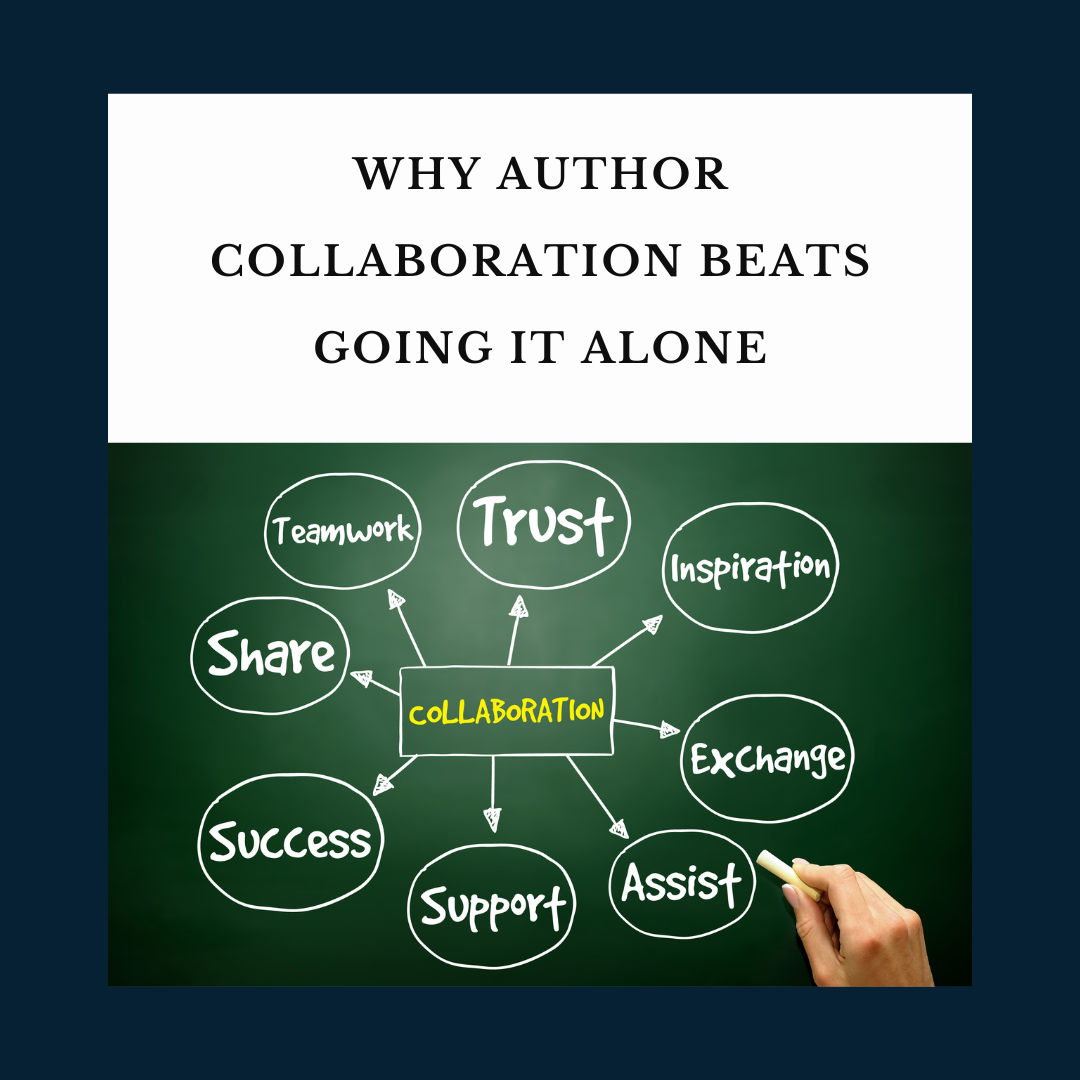
Author collaboration doesn’t come up very often in conversations about building an author platform, but it explains a lot about why the process feels harder than people expect.
Many writers aren’t stuck because they’re doing the wrong things. They’re stuck because they’re doing all of it alone.
Writing starts as a solo act, so it’s easy to assume everything else should be solo too. You write the work. You build the site. You try to show up online. You read advice, test things, and keep going. On paper, it looks like progress. In practice, it can feel disconnected. There’s effort going out, but not much coming back.
You can be doing real work and still feel unsure whether any of it is landing. No feedback. No shared context. Just you making decisions in your own head and wondering if this is what building an author platform is supposed to feel like.
For a long time, many writers assume that feeling is normal. Something you push through if you’re serious enough. What tends to become clear later is that it’s not usually a motivation issue or a discipline issue. It’s what happens when the entire process stays isolated for too long.
Author collaboration doesn’t have to mean networking events or big group projects. At its most basic level, it means building alongside other writers instead of carrying every decision on your own. It means having some shared context while the work is still in progress, not just after it’s finished.
This is for new and early-stage authors who are showing up but feeling disconnected from the process. Especially if you’re introverted. Especially if you’ve been telling yourself you just need to handle it on your own. That’s often the point where collaboration starts to matter more than people realize.
Why Is Author Collaboration So Important for New Writers?
Author collaboration is important for new writers because it provides early access to feedback, context, and momentum before results are visible. At the beginning stages, writers don’t lack effort, they lack signals that help them understand what’s working and what’s normal.
Collaboration gives new writers external reference points early, which reduces guesswork and shortens the learning curve.
Writing itself is a solo activity. Drafting, revising, learning craft, that all happens alone. The problem starts when platform-building stays just as isolated. Every question and decision gets handled internally, with no outside reference point.
Example: Think about a new author who’s posting regularly and building a mailing list, but hearing almost nothing back. They don’t know if their newsletter cadence makes sense, if their topics are landing, or if the slow growth they’re seeing is normal. On their own, every decision feels heavier than it needs to. When that same writer starts checking in with one other author at a similar stage, something shifts. They compare notes. They realize their numbers aren’t unusual. They see that both of them are struggling with the same questions. Nothing about the work changes overnight, but the writer stops second-guessing every step and keeps going with more confidence.
Writing Has Always Grown in Community
If you look at how writers have developed over time, complete isolation has never been the norm. Workshops, critique groups, writing circles, classrooms, and informal partnerships have always played a role in helping writers learn and stick with the work.
What we call community now often looks digital, but the purpose hasn’t changed. Writers tend to stay more consistent when someone else is aware of what they’re working on, even in a low-key way.
Research supports this. Studies on writing groups show that writers who work alongside others often feel more motivated and are more likely to continue than those working entirely alone. Research on creative collaboration also shows that sharing work-in-progress helps confidence grow through interaction rather than perfection.
This doesn’t require a large group or a formal setup. Often, it’s just one other writer who understands the stage you’re in. That shared context doesn’t solve everything, but it makes the work feel more grounded. When the work feels steadier, it becomes easier to stay in it.
Trying to tell what’s actually normal at this stage and what deserves adjustment? Visit my resource page for practical tools that help you interpret progress without spiraling into guesswork.
What Happens When Authors Try to Build a Platform Alone?
When authors try to build a platform alone, they are forced to make every strategic and creative decision without feedback or comparison. Over time, this leads to decision fatigue, stalled momentum, and difficulty telling whether effort is producing meaningful progress.
Solo platform-building doesn’t fail because authors stop working, it fails because there’s no system to support judgment, pacing, or recovery.
Early on, doing everything yourself can feel efficient. You’re learning tools, setting things up, experimenting. The problem is that without any outside reference point, it becomes difficult to tell what’s actually helping, what’s normal for this stage, and what’s quietly draining you.
Example: Consider an author who’s posting consistently, trying different content formats, and watching their analytics closely, but doing all of it alone. One week they wonder if they should post more often. The next week they question whether they should stop posting altogether. A small dip in engagement feels personal. A small uptick creates pressure to keep pushing. Because there’s no outside perspective, every signal gets overinterpreted. Over time, the work doesn’t stop, but it slows. Decisions take longer. Breaks stretch out. The author isn’t unmotivated, they’re just carrying too many unanswered questions at once.
Isolation Looks Like Progress Until It Doesn’t
For many writers, isolation doesn’t look like failure. It looks like this:
- Creating content regularly without knowing how it’s landing
- Watching numbers change without knowing what they mean
- Revisiting the same decisions because nothing feels settled
- Taking longer breaks than planned and feeling uneasy starting again
None of this means you don’t care. It usually means there’s no shared context. No one to say, “That’s normal,” or “You’re not behind,” or “That part doesn’t matter as much as you think.”
Research shows that social isolation affects motivation and follow-through, even when people are invested in their work. When effort isn’t shared or witnessed, it becomes harder to carry over time.
What often follows isn’t burnout. It’s hesitation. You post less. You second-guess small choices. Trying something new starts to feel riskier than it should. At that point, many writers assume they’re missing a strategy. Often, it’s simply what happens when too much of the process has been handled alone.
Seeing yourself in this pattern of effort and hesitation but unsure how to break it? Contact me with your questions so we can sort through what’s really slowing things down.
How Does Author Collaboration Create Better Visibility Over Time?
Author collaboration creates better visibility because audiences discover writers through repeated exposure in shared spaces, not through isolated posts. When authors appear alongside others consistently, their names become familiar before readers actively seek them out.
This kind of visibility compounds gradually, making recognition and trust more likely than one-off promotion.
When authors work solo, visibility often feels fragile. You publish something, share it, and wait. If it doesn’t land, everything goes quiet again. With collaboration, visibility doesn’t rest on a single post. It comes from being seen alongside other writers in small, repeatable ways.
Example: Imagine a writer who contributes a short piece to a themed blog roundup, then later comments on a few posts from the same group. A few weeks later, they’re mentioned in a shared newsletter or tagged in a related conversation. None of these moments are big on their own, and none of them go viral. But a reader who follows that space starts seeing the same name appear again and again. By the third or fourth time, the name feels familiar. When that reader eventually clicks through to the writer’s site or newsletter, it doesn’t feel like discovering a stranger. It feels like finding someone they already recognize.
Solo Visibility vs. Collaborative Visibility
| Solo Visibility | Collaborative Visibility |
| Depends on personal energy | Shared effort and shared presence |
| One-off posts | Repeated exposure |
| Easy to disappear | Easier to stay visible |
| Feels like broadcasting | Feels like participation |
Readers tend to trust writers they recognize within communities. Seeing the same names connected to work they already enjoy makes those names feel familiar and credible.
This doesn’t require big collaborations or coordinated launches. Overlapping spaces and shared conversations are often enough. Visibility built this way layers slowly and tends to last longer than one-off promotion.
Wondering how visibility fits into your platform without adding more pressure to perform? Take a look at my services and packages to see how sustainable, collaborative visibility can work.
Why Does Author Collaboration Improve Confidence and Consistency?
Author collaboration improves confidence and consistency because it introduces accountability and observation into the process. When work is no longer entirely private, writers are more likely to follow through, make decisions, and continue even when motivation fluctuates.
Consistency improves not because writers feel more confident, but because the process becomes externally reinforced.
On your own, confidence often gets tied to response. Did anyone engage? Did it perform well? When those signals are quiet, doubt creeps in. Collaboration shifts confidence away from outcomes and toward participation.
Example: Think about a writer who’s committed to posting once a week but keeps missing weeks when motivation dips. On their own, skipping feels easy to justify, and getting back into it feels heavier each time. When that same writer starts checking in weekly with one other author, nothing about their goals changes. There’s no deadline and no enforcement. But knowing someone will casually ask, “How did the week go?” changes how they approach the work. They post more often, not because they feel more confident, but because the process feels witnessed. Showing up becomes part of a shared rhythm instead of a private struggle.
Being Seen Changes How the Work Feels
This usually shows up in practical ways:
- Decisions happen faster because ideas don’t stay stuck in your head.
- Showing up feels easier when someone knows you’re working on something.
- Imperfect work feels normal instead of discouraging.
- Momentum builds because progress is noticed.
Research on accountability shows that even light awareness from another person increases consistency. For writers, that can be as simple as knowing someone will ask how it’s going.
Over time, confidence becomes less dependent on outside response. Consistency feels more routine instead of fragile.
Curious whether a small amount of outside perspective could make consistency feel steadier for you? Sign up for a free 30-minute consultation call to talk through your situation without pressure.
What Fears Actually Stop Authors From Collaborating?
The fears that stop authors from collaborating are rarely logistical. They are psychological concerns tied to perceived readiness, value, and belonging. Many writers delay collaboration because they believe they need credentials, visibility, or permission before reaching out.
These fears persist even when opportunities are available, which is why collaboration often feels inaccessible despite being low-risk.
That hesitation often shows up as waiting. You tell yourself you’ll reach out later, once things feel clearer or more settled.
Example: Think about a writer who sees a call for contributors or hears another author mention an accountability group. They pause before responding. They reread the message, then close the tab. They tell themselves they’ll come back to it once they’ve published more, grown their list, or figured out their voice a bit better. Nothing is actively stopping them. The opportunity is there, and it’s low-pressure. But the uncertainty about whether they belong in that space is enough to delay action. Days pass. Then weeks. Eventually, the moment feels gone, even though the real barrier was hesitation, not readiness.
Common Hesitations
- “I’m not far enough along.”
- “I don’t really have a platform.”
- “I don’t want to bother anyone.”
- “Everyone else seems further ahead.”
These doubts are common among capable, thoughtful writers. Research on imposter syndrome shows they tend to appear most often in people who care deeply about their work.
The issue is that hesitation slows progress without fully stopping it. Collaboration stays in the “someday” category, and working alone starts to feel normal, even when it isn’t helping.
What Actually Counts as Author Collaboration at This Stage?
At this stage, author collaboration refers to shared process, not shared authority or audience size. It includes small, informal interactions where effort, progress, or space is shared with other writers.
Collaboration does not require long-term commitments, public projects, or equal platforms, only mutual participation.
Example: Imagine two early-stage authors who both send monthly newsletters. Neither has a large list, and neither feels like an expert yet. Instead of trying to grow alone, they decide to co-write one issue together. They each contribute a short section, link to each other, and send it to their own lists. There’s no long-term commitment and no pressure to repeat it. The value isn’t the size of the audience. It’s that both writers get to work through the process with someone else and see how another author approaches the same stage of growth.
Practical Examples
- Co-writing one newsletter issue or short piece
- Contributing to a themed blog roundup
- Joining a small accountability group
- Guest posting for another author at a similar stage
- Hosting a casual joint Q&A
These work because they create shared context. Someone else knows what you’re working on while it’s still in progress. That often changes how you experience your own pace and progress.
Not sure which of these options actually fits where you are right now? Download the Collaboration Readiness Checklist to identify low-pressure ways to start without waiting to be “ready.”
How Can Introverted Authors Collaborate Without Burning Out?
Introverted authors collaborate successfully by limiting scope, frequency, and social intensity. Sustainable collaboration prioritizes predictability and recovery time rather than constant interaction.
When collaboration is structured to match energy levels, introverted writers are more likely to remain engaged without exhaustion.
Example: Consider an introverted writer who joins a large online group hoping for support, then slowly stops participating because the volume of conversation feels overwhelming. Later, that same writer switches to a one-to-one accountability check-in with another author. They agree to email once a week with a short update and no expectation of immediate replies. The interaction is predictable, limited, and easy to step into. Instead of feeling drained, the writer finds they actually look forward to the check-in because it fits their energy rather than competing with it.
Collaboration That Respects Energy
- One-to-one connections
- Time-bound projects
- Asynchronous communication
- Clear expectations
Research on introversion shows that predictable, structured interaction is easier to sustain. For writers, this might mean choosing one accountability partner instead of a group, or collaborating on a single piece instead of committing long-term.
When collaboration fits your energy, it stops feeling draining and starts feeling supportive.
What Is One Small, Low-Pressure First Step Toward Author Collaboration?
The most effective first step toward author collaboration is reconnecting with an existing contact rather than initiating a new relationship. Familiar connections reduce social risk and eliminate the need for self-promotion.
Starting small allows writers to experience collaboration without committing to ongoing interaction.
A Simple Approach
- Write down three people you already know in the writing space.
- Choose the one who feels easiest to reach out to.
- Send a short message with no pitch.
- If it feels natural, suggest a small way to stay connected.
The goal isn’t to start a project. It’s to reopen a line of connection.
Example: Think about a writer who remembers someone they met in a workshop months ago. They haven’t spoken since, and the connection feels thin. Instead of trying to turn it into anything more, the writer sends a simple message: “I was thinking about that workshop we took and wanted to say hi.” That’s it. No ask. No plan. The conversation is brief, but it breaks the sense of working in complete isolation. A week later, when the writer sits down to work, the process feels a little less heavy. Nothing has changed on the outside, but the work no longer feels entirely private.
Even one conversation can change how the work feels.
Conclusion
Author collaboration isn’t something you add after everything else is figured out. For many writers, it’s the part that makes the rest of the process feel manageable.
If building your author platform has felt heavy or isolating, that doesn’t mean you’re behind. It usually means you’ve been doing too much of it alone.
Collaboration doesn’t need to be loud or impressive. It often starts quietly, with one shared check-in or one small connection. Over time, those connections support confidence, consistency, and visibility in ways that are hard to replicate on your own.
If you want to take one simple step this week, write down three people you already know in the writing space. Choose one. Reach out without an agenda.
That’s often where momentum begins. Not with more output, but with not doing this alone anymore.
You Don’t Need a Bigger Platform to Collaborate
This checklist helps you stop waiting to be “ready” and start building momentum with what you already have.
- See where collaboration already fits into your author platform, even if you’re early-stage or feel isolated
- Identify people you already know, follow, or interact with, no cold outreach required
- Get one clear, low-pressure next step to start a real conversation without pitching
Build Your Author Platform With Support, Not Guesswork
If building your platform has felt isolating, heavy, or harder than it should, the issue often isn’t effort or discipline. It’s trying to make every decision without context or feedback.
Author Platform Assessment & Coaching Sessions are designed for writers who want clarity, perspective, and steady forward movement without having to figure everything out alone.
This is a good fit if you want to:
- Get outside perspective on what’s working, what’s normal, and what can wait
- Stop second-guessing platform decisions in isolation
- Build momentum with guidance instead of pushing blindly
- Talk through your platform honestly without pressure or performative “networking”
- Feel supported while the work is still in progress, not just after the fact
You don’t need a bigger audience or more output. You need shared context and grounded feedback at the right moment.

Leave a Reply